

24 Jul When the Ground Shifts: How House Levelling Restores Strength, Safety and Value
Why House Levelling Is the Key to Restoring Stability in New Zealand Homes
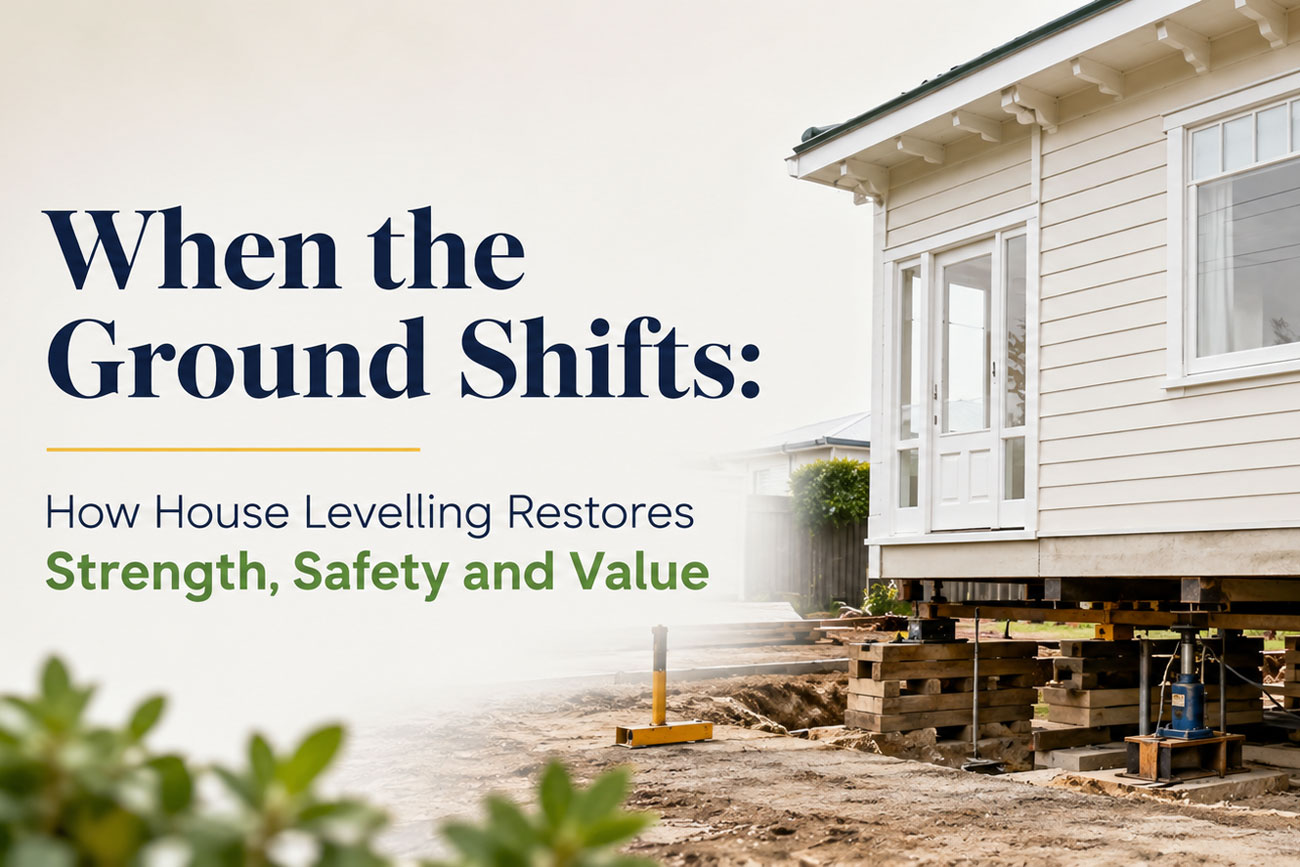
House levelling plays a critical role in protecting the structural integrity of homes across NZ, especially as foundation movement becomes more common with shifting ground conditions and ageing foundations. What often starts as minor uneven floors or sticking doors can quickly develop into more serious issues affecting the entire structure. House levelling and repiling are not just corrective measures — they are essential processes that restore balance, reinforce foundations and ensure long-term safety. Whether dealing with timber piles, a concrete slab, or signs of foundation water damage, the right foundation solutions can bring a property back to level and prevent further deterioration.
Understanding when to act is just as important as the work itself. Many homeowners delay foundation repair, not realising that early intervention can significantly reduce both cost and disruption. Professional house levelling involves careful assessment, precise lifting work using hydraulic jacks, and, where required, the installation of new piles to meet current building code standards. If your home is showing signs of movement or you suspect it may need relevelling or lifting, now is the time to take it seriously. Visit NZ CCS to learn how experienced foundation repair specialists can restore your home’s strength, safety and long-term value.
Why house levelling is crucial for maintaining structural integrity
How foundation movement affects the long-term safety of your home
Foundation movement is one of the most common causes of structural issues in NZ homes, particularly where soil conditions shift or drainage is poor. Over time, even small changes beneath the surface can lead to uneven floors, cracking walls, and stress on load-bearing areas. House levelling is crucial because it corrects these imbalances before they develop into more serious problems. Left untreated, foundation movement can compromise structural integrity, making the home less safe and significantly reducing its long-term value.
Addressing these issues early allows for targeted foundation repair rather than extensive structural work. Professional assessments identify the underlying causes, whether related to timber pile deterioration, moisture damage, or soil instability. From there, the appropriate foundation solutions can be applied, ensuring the home is stabilised and properly supported moving forward. This proactive approach protects both the physical structure and the overall investment.
Why uneven floors are often the first warning sign
Uneven floors are often the earliest and most noticeable sign that a home may require house levelling or repiling. These changes can be subtle at first, such as furniture no longer sitting flat or doors beginning to stick. As the problem progresses, the unevenness becomes more pronounced, indicating that the foundations and piles are no longer supporting the structure evenly. These signs should not be ignored, as they often point to deeper issues underneath the house.
Recognising uneven floors as an early warning allows homeowners to act before further damage occurs. In many cases, relevelling a house at this stage can prevent the need for more extensive repiling and foundation work. Understanding the importance of early detection is key, particularly when reviewing house levelling is crucial for maintaining long-term stability and preventing ongoing structural issues.
How house levelling protects property value and long-term durability
House levelling does more than correct visible issues — it plays a vital role in preserving the long-term durability and value of a property. A home with stable foundations and level floors is far more attractive to buyers and less likely to encounter ongoing repair costs. Foundation stabilisation ensures that the structure performs as intended, reducing the risk of further movement or damage over time.
A properly levelled home also supports other aspects of the building, including framing, roofing, and internal finishes. When foundations are out of alignment, stress can transfer throughout the structure, leading to additional maintenance issues. Investing in professional house levelling and repiling helps prevent this cycle, ensuring the home remains safe, functional, and structurally sound for years to come.
What causes houses to go out of level in New Zealand?
The impact of soil conditions and moisture on foundations
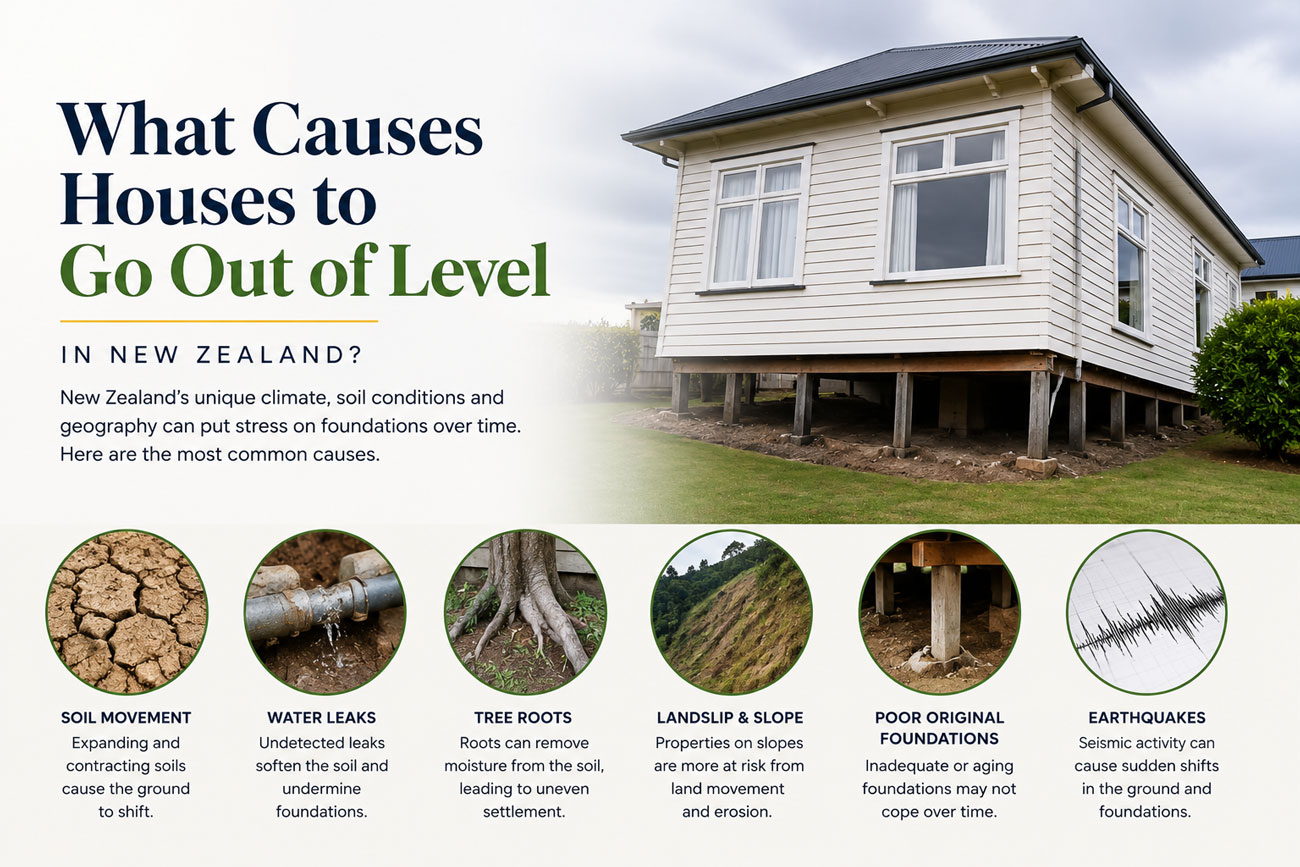
Soil conditions play a major role in the stability of foundations across NZ. Expansive soils can swell when wet and shrink during dry periods, creating movement beneath foundations and piles. Over time, this repeated cycle leads to uneven settlement and the need for house levelling. Moisture is another key factor, as poor drainage or water accumulation can weaken the ground supporting the structure.
In areas where water damage is present, signs of foundation water damage may appear, including damp conditions underneath the house and deterioration of timber piles. These conditions reduce the load-bearing capacity of the foundation and accelerate structural movement. Addressing moisture-related issues alongside foundation repair is essential for achieving a long-term solution.
How ageing timber piles and older construction methods contribute
Many older homes rely on timber piles that have been in place for decades. While these were effective at the time of construction, natural wear, rot, and environmental exposure can weaken them significantly. As timber deteriorates, it loses its ability to support the structure evenly, leading to gradual settlement and the need for repiling.
Older construction methods may also lack the reinforcement and engineering standards required today. This means that even without obvious damage, foundations may no longer meet current building code expectations. Repiling and foundation upgrades provide an opportunity to install new piles and improve the overall performance of the structure, ensuring it is better suited to modern conditions.
Why poor drainage and weather events accelerate foundation movement
Drainage issues are a major contributor to foundation movement, particularly during heavy rainfall or storm events. Water pooling around foundations can erode supporting soil or create voids beneath a concrete slab, leading to instability. Over time, this can result in uneven floors, cracks, and the need for more extensive foundation work.
Severe weather events can accelerate these problems, placing additional stress on already vulnerable foundations. Homes that have experienced repeated exposure to moisture are more likely to require house levelling and repiling to restore stability. For a deeper understanding of how environmental factors contribute to these issues, reviewing foundation movement can highlight the importance of addressing both immediate damage and long-term risk factors.
How house levelling and repiling actually work
The step-by-step process of lifting and re-levelling a home
House levelling and repiling follow a structured process designed to safely restore the property to its correct level. It begins with a detailed inspection of the foundation type, identifying areas of movement and assessing the condition of existing foundations and piles. Once confirmed, access underneath the house is prepared, allowing an experienced team to position hydraulic jacks at key structural points. These jacks are used to carefully lift the house in controlled increments, ensuring the structure remains stable throughout the process.
After the home is lifted back into position, new piles may be installed or existing ones reinforced depending on the level of deterioration. Repiling involves replacing compromised timber piles with stronger, long-lasting materials that meet current building code standards. This ensures the home is not only levelled but also properly supported for the future. Every stage is monitored closely to maintain structural integrity and prevent additional stress on the building.
When house repiling is required instead of simple re-levelling
While some homes only require re-levelling, others need full house repiling due to significant deterioration of foundations and piles. This is common in older properties where timber piles have weakened over time or where foundation movement has caused ongoing instability. If the underlying support system is compromised, lifting the house alone will not provide a long-term solution, making repiling and foundation work essential.
A thorough assessment will determine whether re-levelling is sufficient or if repiling is required to restore stability. In cases where multiple piles are affected, installing new piles ensures the structure is evenly supported and compliant with modern standards. This approach eliminates the risk of recurring movement and provides a solid foundation for the home moving forward.
The role of modern equipment and experienced teams in structural work
Successful house levelling relies heavily on the use of modern equipment and the expertise of an experienced team. Hydraulic jacks, laser levelling tools, and specialised access equipment all play a role in achieving precise results. Working underneath the house requires both technical skill and practical experience, particularly when dealing with restricted spaces or complex foundation conditions.
Experienced foundation repair teams understand how to manage each stage of the process, from initial lifting work through to final stabilisation. Strong project management ensures that the work is completed efficiently while maintaining high safety standards. This combination of equipment and expertise is essential for delivering reliable, long-term foundation solutions.


Common foundation repair solutions used in NZ homes
How underpinning strengthens existing foundations
Underpinning is a widely used method for reinforcing existing foundations without completely replacing them. It involves extending or strengthening the base of the foundation to improve its load-bearing capacity. This is particularly effective where foundation movement is moderate and the existing structure can be stabilised rather than fully rebuilt.
In many cases, underpinning is used alongside house levelling to ensure the home remains stable after it has been re-levelled. This approach provides additional support to areas that have experienced settlement, reducing the risk of future movement. It is a practical solution where targeted reinforcement can deliver long-term stability without the need for full repiling.
When void filling is the right solution for uneven floors
Void filling is an effective solution where gaps have formed beneath a concrete slab or foundation due to soil erosion or water movement. These voids can cause sections of the home to sink, leading to uneven floors and structural stress. By injecting specialised materials into the voids, the foundation is stabilised and support is restored.
This method is particularly useful when the overall foundation structure remains intact but requires additional support in specific areas. It offers a less invasive alternative to full repiling, making it a cost-effective option for certain foundation repair projects. Understanding when void filling is appropriate helps ensure the correct solution is applied based on the specific conditions of the site.
Combining repiling and house levelling for long-term stability
In many situations, the most effective solution involves combining house levelling with repiling and foundation work. This approach ensures that once the home is lifted and levelled, it is supported by new foundations designed to withstand future movement. Simply re-levelling without addressing the condition of the piles can lead to recurring issues.
By integrating these processes, homeowners benefit from a comprehensive solution that improves both immediate stability and long-term performance. This combined method addresses the root cause of foundation movement, providing confidence that the home will remain level and structurally sound over time.
Why professional house levelling is better than DIY fixes
The risks of attempting foundation repair without expertise
Attempting foundation repair without the necessary expertise can lead to serious structural risks. House levelling involves precise lifting work, careful load distribution, and a clear understanding of how foundations and piles interact. Without the correct knowledge and equipment, it is easy to cause further damage rather than resolve the issue.
DIY approaches often fail to address the underlying causes of foundation movement, resulting in temporary fixes that do not last. In some cases, incorrect lifting or support can place additional stress on the structure, increasing the risk of long-term damage. Professional assessment and execution are essential for ensuring safe and effective results.
How experienced teams ensure safe and compliant results
Experienced teams bring the technical knowledge and equipment required to carry out house levelling safely and efficiently. They understand how to assess foundation conditions, plan the lifting process, and install new piles where necessary. This ensures that all work is carried out in accordance with building code requirements and industry standards.
Proper project management also plays a key role, ensuring that each stage of the process is completed in the correct sequence. This structured approach reduces the risk of errors and ensures the final result meets both safety and performance expectations.
The long-term cost savings of doing it right the first time
While professional house levelling may involve a higher upfront cost, it often results in significant long-term savings. Correctly addressing foundation issues prevents the need for repeated repairs, reducing overall maintenance costs over time. It also protects the value of the property by ensuring the structure remains stable and compliant.
Investing in experienced foundation repair from the outset eliminates the risk of ongoing problems and provides peace of mind. A properly levelled home with stable foundations is far less likely to experience future movement, making it a worthwhile investment for any homeowner.


Conclusion
House levelling and repiling are essential for protecting the long-term stability and value of homes across NZ. What often begins as minor foundation movement or uneven floors can quickly develop into more serious structural concerns if left unaddressed. From identifying early signs of foundation issues through to selecting the right foundation solutions, every step plays a role in ensuring the home remains safe, level, and structurally sound. Whether the solution involves re-levelling, underpinning, or full house repiling, the key is addressing both the symptoms and the underlying causes of movement.
Choosing the right approach and the right team makes all the difference. An experienced foundation repair specialist will assess the condition of foundations and piles, recommend the most effective solution, and manage the entire process to meet building code standards. If your home is showing signs of movement or you are unsure whether you need relevelling or lifting, it is important to act before the problem worsens. Learn more about proven foundation solutions and expert support by visiting NZ CCS, where experienced teams deliver reliable house levelling and repiling services designed for long-term results.
