

21 Jan Re-Levelling a House in NZ: What Every Homeowner Needs to Know Before the Floor Tilts Further
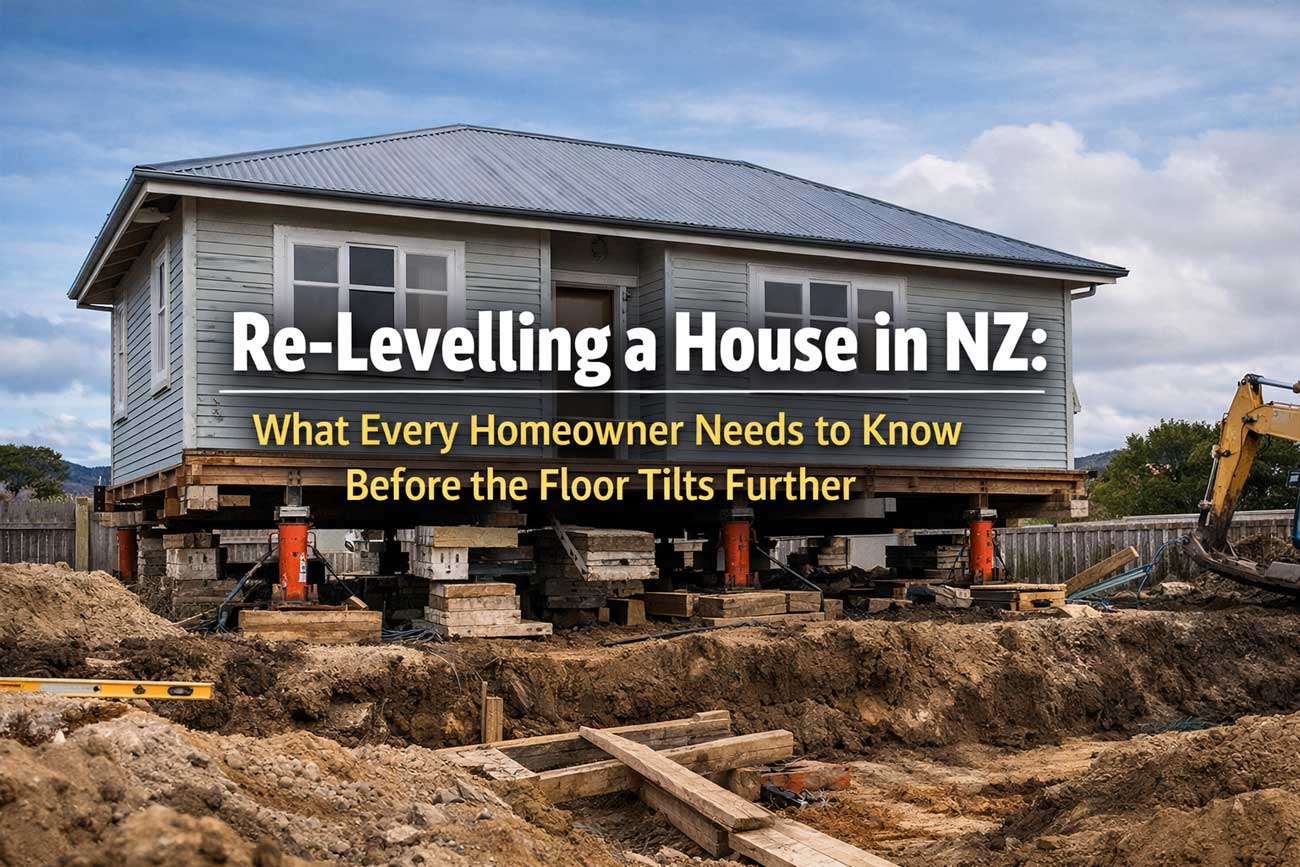
Re-levelling a House: What Every Homeowner Needs to Know Before the Floor Tilts Further
Re-levelling a House: What Every Homeowner Needs to Know Before the Floor Tilts Further is essential reading when uneven floors, sticking doors and windows, or visible perimeter gaps start to appear. These warning signs often point to foundation movement caused by subsidence, earthquake damage, or changes in the soil underneath your home. Whether the structure sits on timber piles or a concrete slab, house relevelling and foundation repair services are designed to restore floor level, structural stability, and long-term performance. Solutions can range from jack and pack methods and re-piling through to hydraulic lifting, grout injection, or void filling beneath your home, depending on bearing capacity and the repair plan signed off by a structural engineer. A properly re-levelled home should meet building code requirements and stand the test of time, not just offer a temporary fix.
For homeowners wondering if foundation work needs to be done now or can wait, understanding the levelling process early can prevent more invasive and costly repairs later. A professional assessment can determine whether repiling, slab stabilisation, or foundation replacement is required, and whether the work qualifies for consent exemption or involves EQC considerations for earthquake-damaged properties. If you are unsure where to start, reading about whether your house may need relevelling or lifting can help clarify the next steps. NZ CCS brings many years of experience in house levelling, offering practical, non-invasive and cost-effective solutions delivered by an experienced team. If your floors are no longer level, contact us today to discuss a tailored repair approach and secure your home’s foundation before the problem grows.
What is foundation repair and when does a foundation need re-levelling?
How do I know if my foundation or slab needs repair or to be re-levelled?
What is foundation repair and when does a foundation need re-levelling? This question usually arises when a house may no longer sit at a consistent level across the floor. Foundation repair covers a range of foundation work designed to restore structural integrity, including re-levelling, repiling, underpinning, slab stabilisation, or in some cases foundation replacement. Homes built on timber piles, slab foundations, or a concrete slab can all experience movement due to subsidence, changes in bearing capacity, or soil underneath shifting over time. Uneven floors, visible slope across a timber floor, or a concrete floor that no longer meets floor level tolerances can indicate that re-levelling or house relevelling may be required to meet building code expectations.
A proper assessment looks beneath your home to understand whether the levelling process can be achieved using non-invasive methods such as jack and pack, hydraulic lifting, or grout injection, or whether re-piling with new piles is needed. Structural engineers and geotechnical input often guide the repair plan, especially where slab foundations or earthquake-damaged properties are involved. Homeowners wanting a deeper understanding of how re-levelling fits into long-term stability can explore why house levelling is crucial for long-term stability, which explains how a re-levelled foundation performs over the test of time.
Common signs of uneven floors, doors and windows sticking due to foundation movement
What is foundation repair and when does a foundation need re-levelling? The answer is often revealed through everyday signs inside the home. Uneven floors are one of the most common indicators, whether on a timber floor or a concrete slab, and can be subtle or clearly visible. Doors and windows sticking, uneven gaps at the perimeter, cracked grout lines, or sloping concrete floors can all point to foundation movement. These issues are not purely cosmetic; they often reflect changes beneath your home caused by subsidence, moisture-related soil movement, or historic construction methods that no longer meet modern levelling system expectations.
Over time, foundation movement can affect load paths, floor level consistency, and even the way a house responds to future earthquakes. Some homes may need relevelling using hydraulic jacks or computer-controlled lifting systems, while others may require void filling, stabilisation, or partial foundation repair services to address localised issues. Understanding how these signs develop is important, particularly when comparing DIY fixes against professional foundation work. Insight into this decision-making process is covered in the pros and cons of DIY versus professional foundation repairs, which outlines why early diagnosis often leads to more cost-effective solutions.
Does earthquake damage or years of experience in house assessments affect the decision?
What is foundation repair and when does a foundation need re-levelling? Earthquake damage plays a significant role in answering this question, especially for homes that have already experienced seismic events. Earthquake-damaged foundations may suffer from shifted piles, cracked slab foundations, reduced bearing capacity, or voids beneath the structure that compromise stability. In these cases, years of experience in house assessments become critical, as not all damage is visible at surface level. Foundation repair decisions often rely on input from a structural engineer, geotechnical findings, and an understanding of how previous earthquake forces interacted with the soil underneath and the original construction method.
Experience also matters when determining whether re-leveling, house lifting, re-piling, or foundation replacement is the most appropriate solution. Some properties may qualify for consent exemption for certain types of relevelling, while others require a more detailed repair plan involving excavation or grout injection. Assessors with many years of experience in the construction industry are better equipped to identify whether foundation work needs to be done immediately or monitored over time. This depth of knowledge supports practical solutions that prioritise long-term success rate, safety, and compliance rather than short-term fixes that may not stand the test of time.
What are the repiling and house repiling options for timber and concrete slab foundations?
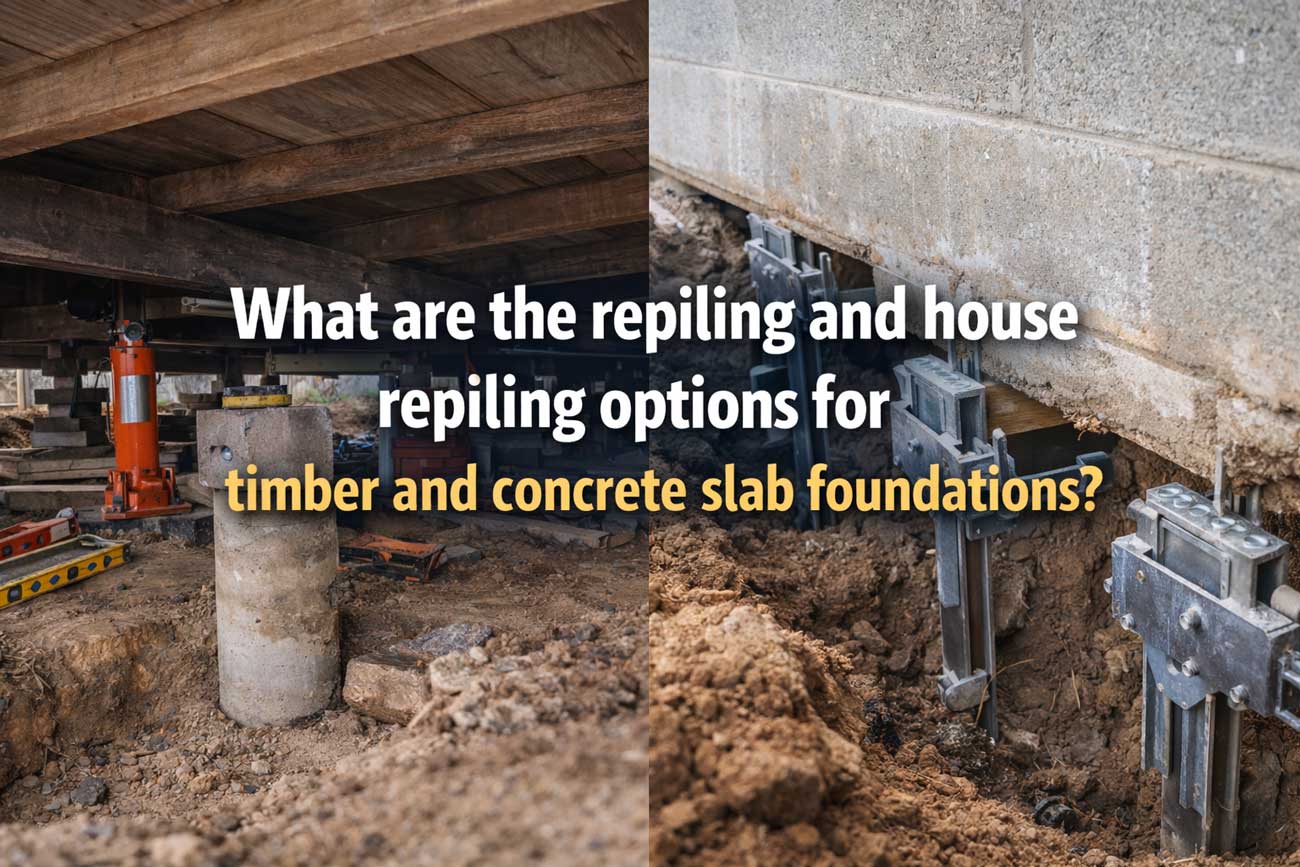
How does repiling work for timber floor homes and timber foundations?
What are the repiling and house repiling options for timber and concrete slab foundations? For timber floor homes, repiling is one of the most established foundation repair methods when uneven floors, loss of floor level, or perimeter movement becomes evident. Timber foundations rely on piles to transfer loads into the soil underneath, and over time these piles can settle, rot, or shift due to subsidence or earthquake activity. House repiling involves gaining access beneath your home, lifting sections of the structure using hydraulic jacks or a jack and pack approach, and installing new piles to restore level and bearing capacity. Once the structure is re-levelled, fixings are secured to meet building code requirements.
A considered levelling process is critical for timber homes, as re-levelling too aggressively can affect doors and windows, internal linings, and services. Engineers often specify whether partial repiling, underpinning, or a full re-piling programme is needed based on years of experience in house assessments and geotechnical input. Guidance on how these systems protect long-term performance is covered in how piling protects structures from the ground up, which explains why correctly installed timber piles remain a practical solution that stands the test of time.
Can repiling be used with slab foundations or concrete slab replacement?
What are the repiling and house repiling options for timber and concrete slab foundations? Slab foundations and concrete floors present a different challenge, as the structure is supported by a continuous concrete slab rather than discrete timber piles. Traditional repiling is not always suitable for slab foundations, but foundation repair can still involve elements of piling, underpinning, or stabilisation beneath the slab edge or load-bearing points. Techniques may include excavating locally, installing piles beneath the slab perimeter, or using grout injection and void filling to improve bearing capacity without full concrete slab replacement.
In some cases, slab re-leveling can be achieved through hydraulic lifting combined with controlled grout injection beneath the slab to restore level and support. Structural engineers assess whether the slab can be re-levelled safely or whether foundation replacement offers a more reliable outcome. A broader overview of how repiling integrates with slab and void solutions is explained in foundation repair, repiling, and void filling options, highlighting when non-invasive approaches are appropriate and when more extensive foundation work may need to be done.
When is foundation replacement better than repiling or underpinning?
What are the repiling and house repiling options for timber and concrete slab foundations? In some situations, foundation replacement is a more appropriate solution than repiling or underpinning. This is typically the case when the existing foundation system has widespread failure, significant earthquake-damaged elements, or materials that no longer meet modern construction standards. Homes with extensive subsidence, compromised concrete slabs, or multiple generations of poorly performing repairs may not achieve long-term stability through partial solutions alone.
A decision to replace foundations is based on structural engineer input, building code compliance, and a clear repair plan that considers soil conditions and future performance. While foundation replacement is more invasive, it can provide a consistent levelling system, improved durability, and a higher success rate over time. For some properties, replacing the foundation avoids repeated relevelling cycles and offers a clearer path to long-term stabilisation, especially where previous foundation repair services have failed to address underlying issues beneath the home.
How does the levelling process work: jacks, hydraulic lifters and Smartlift systems?
What is the difference between jack and pack, hydraulic lifter and Smartlift methods?
How does the levelling process work: jacks, hydraulic lifters and Smartlift systems? The difference lies in the level of control, precision, and suitability for different foundation types. Jack and pack is a traditional method commonly used for timber floor homes, where manual jacks lift sections of the house and packers are inserted to restore floor level. This approach is often effective for minor uneven floors and selective re-levelling but relies heavily on experience to avoid overstressing the structure. Hydraulic lifters introduce greater control by using hydraulic pressure to lift the house more evenly, making them suitable for larger relevelling projects and homes affected by subsidence or earthquake movement.
Smartlift-style systems take this further by using computer-controlled hydraulic lifting to re-level a structure incrementally and evenly across multiple points. This method is often preferred for complex house lifting projects or where slab foundations and mixed foundation systems are involved. Structural engineers assess which method best suits the foundation repair strategy, taking into account bearing capacity, soil conditions, and how the house may respond during the levelling process. A broader overview of how these approaches are applied in practice is outlined in residential foundation re-levelling solutions, which explains why method selection is critical for long-term performance.
How is grout, underpin and levelling system used to re-level floors safely?
How does the levelling process work: jacks, hydraulic lifters and Smartlift systems? Lifting alone is only part of the solution, as floors must be supported permanently once the desired level is achieved. Grout injection is commonly used to fill voids beneath a concrete slab or timber foundations, restoring contact between the foundation and the soil underneath. Underpinning strengthens existing foundations by extending them deeper or wider to improve bearing capacity, particularly where subsidence or earthquake-damaged ground conditions are present. Together, these methods form part of an integrated levelling system designed to stabilise the structure after re-leveling.
Once the house is re-levelled, grout and underpinning work help distribute loads evenly and prevent future movement. Engineers carefully control injection pressures and sequencing to avoid lifting too quickly or unevenly, which could affect doors and windows or internal finishes. In some cases, void filling beneath your home provides a non-invasive way to stabilise foundations without extensive excavation. Further insight into this process is available in void filling for foundation stabilisation, which explains how controlled grout placement supports safe and durable foundation work.
How long does the house lifting and levelling process usually take?
How does the levelling process work: jacks, hydraulic lifters and Smartlift systems? The timeframe for house lifting and re-levelling varies depending on foundation type, extent of movement, and the chosen levelling process. Simple jack and pack work on a timber floor may take a few days, while hydraulic lifting combined with repiling, underpinning, or grout injection can extend the programme over several weeks. Slab foundations often require additional time for investigation, curing of grout, and staged lifting to ensure the concrete slab is not overstressed during re-leveling.
Project duration also depends on access beneath the home, the need to excavate, and whether consent exemption or building code sign-off is required. Experienced teams plan the sequence carefully to minimise disruption and allow the structure to settle between lifting stages. While speed is important, controlled progress is essential to achieve a stable, re-levelled outcome that stands the test of time and avoids the need for repeated foundation repair in the future.


How do I stabilise a shifted foundation and prevent future movement?
What stabilisation techniques are used for perimeter and slab foundations?
How do I stabilise a shifted foundation and prevent future movement? Stabilisation techniques depend on whether the home sits on perimeter foundations, slab foundations, or a combination of both. For perimeter systems supporting timber floors, stabilisation often involves repiling, re-levelling, and localised underpinning to restore bearing capacity beneath load-bearing points. Hydraulic lifting or jack and pack methods may be used to correct floor level before new piles or supports are fixed in place. For concrete slab foundations, stabilisation focuses on addressing subsidence and voids beneath the slab through grout injection, slab edge support, and targeted foundation repair to prevent further settlement.
Once the foundation is re-levelled, long-term stabilisation aims to control the causes of movement rather than just the symptoms. This can include improving drainage, strengthening perimeter zones, and managing soil behaviour beneath your home. In some cases, stabilisation extends beyond the footprint of the building, particularly where ground movement or slope instability has contributed to foundation displacement. Situations like these are closely linked to broader ground control strategies such as slope stabilisation and retaining solutions, which help reduce ongoing pressure on foundations and improve overall structural resilience.
When is underpinning or foundation replacement required for stabilisation?
How do I stabilise a shifted foundation and prevent future movement? Underpinning is typically required when the existing foundation no longer has sufficient bearing capacity to support the structure safely. This may occur due to subsidence, earthquake-damaged ground, long-term moisture issues, or original foundations that do not meet modern building code standards. Underpinning strengthens and extends the foundation system, transferring loads to more stable soil underneath and reducing the risk of further movement. It is often used where partial failure has occurred but the majority of the foundation remains structurally sound.
Foundation replacement becomes the preferred option when damage is widespread, materials are significantly degraded, or repeated relevelling and repair attempts have failed. In these cases, stabilisation through incremental fixes may not provide a reliable outcome over the test of time. Structural engineers assess whether replacement offers a clearer, more durable repair plan, particularly for older homes or severely earthquake-damaged structures. Factors such as construction method, soil conditions, and long-term success rate all influence whether underpinning alone is sufficient or whether a full foundation replacement is required to achieve lasting stabilisation.
Are non-invasive options available for relevel and stabilise without major demolition?
How do I stabilise a shifted foundation and prevent future movement? In many situations, non-invasive techniques allow foundations to be re-levelled and stabilised without major demolition. Methods such as controlled hydraulic lifting, grout injection, and void filling can restore floor level and support beneath your home while minimising disruption to the structure above. These approaches are particularly effective for slab foundations and timber homes where access can be gained beneath the floor without extensive excavation. By carefully injecting grout or stabilising material, voids are filled and loads redistributed more evenly across the foundation.
Non-invasive stabilisation relies on accurate diagnosis and careful control during the levelling process. Engineers monitor movement to ensure doors and windows remain functional and internal finishes are not overstressed. These techniques are often chosen when foundation movement is linked to moisture or erosion issues rather than structural collapse. Understanding how water affects soil performance is key in these cases, as outlined in recognising signs of foundation water damage, which explains why early intervention can prevent the need for more invasive foundation work later on.
What are the costs, timeline and risks of house leveling, repiling and foundation repair?
How much does repiling or re-levelling typically cost and what affects price?
What are the costs, timeline and risks of house leveling, repiling and foundation repair? Cost is often the first concern, yet pricing varies widely depending on foundation type, extent of movement, and the repair plan required. Repiling a timber floor home is generally priced per pile, with total cost influenced by access beneath your home, the number of new piles needed, and whether jack and pack or hydraulic lifting is required. Re-levelling slab foundations may involve grout injection, void filling, or underpinning, which can change costs significantly. Soil conditions, bearing capacity, and whether the home has suffered earthquake damage also play a major role in overall pricing.
Project scope has a strong influence on timeline and cost certainty. Simple relevelling work may be completed within weeks, while larger foundation repair projects involving excavation, stabilisation, or partial foundation replacement can extend longer. Engineering input, geotechnical reports, and building code requirements may also affect both time and budget. A detailed overview of how these elements interact is outlined in foundation repair, repiling and void filling explained, which helps clarify why accurate assessment is essential before any cost-effective solution can be defined.
What are the risks to timber floor, concrete floor and doors during house relevelling?
What are the costs, timeline and risks of house leveling, repiling and foundation repair? House relevelling inevitably introduces some level of risk, particularly to timber floors, concrete floors, and internal elements such as doors and windows. Timber floor homes can experience temporary distortion during lifting, which may lead to cracking in linings or changes in how doors operate. Concrete slabs carry different risks, as uneven or rapid lifting can induce stress cracking if the levelling process is not carefully controlled. These risks are managed through staged hydraulic lifting, precise monitoring, and adherence to engineered lift tolerances.
Risk is also influenced by how much movement is required to achieve a re-levelled outcome. Older homes with years of settlement or subsidence may respond differently compared to newer structures. Experienced teams plan lifting sequences to minimise stress on the perimeter, services, and internal finishes. Understanding the balance between correction and tolerance is critical, especially where doors and windows are already affected. Broader discussion around managing these risks is covered in the comparison between DIY and professional foundation repairs, which highlights why controlled methods reduce long-term issues.
How to choose experienced foundation repair services, FIL engineers or construction industry contractors?
What are the costs, timeline and risks of house leveling, repiling and foundation repair? Choosing the right professionals is central to managing all three. Foundation work requires coordination between foundation repair services, structural engineers, and construction industry contractors who understand levelling systems, soil behaviour, and building code requirements. Experience matters, particularly for complex projects involving re-piling, underpinning, or slab stabilisation. Teams with many years of experience in house assessments are better equipped to identify whether relevelling, foundation replacement, or stabilisation is the most appropriate solution.
A sound repair plan should be supported by engineering input, clear methodology, and an understanding of long-term performance rather than short-term correction. Contractors should demonstrate familiarity with hydraulic lifting, non-invasive techniques, and compliance pathways such as consent exemption where applicable. Assessing past project success rate, technical capability, and integration with engineers helps ensure the chosen approach delivers a durable outcome that stands the test of time, rather than repeating cycles of foundation repair.


How do I find the right contractor and what should I ask before I contact us?
What questions to ask about years of experience in house leveling, NZ locations like Christchurch or Auckland?
How do I find the right contractor and what should I ask before I contact us? One of the first areas to explore is a contractor’s years of experience in house leveling and foundation repair, particularly across different ground conditions and seismic zones. Experience matters because timber floor homes, slab foundations, and earthquake-damaged properties all respond differently during the levelling process. Asking where a contractor has worked, whether in Christchurch, Auckland, or other regions with varying soil behaviour, helps establish whether they understand subsidence, bearing capacity, and long-term stabilisation rather than just surface correction.
A useful follow-up is to ask how that experience translates into practical solutions. Contractors should be able to explain past relevelling, repiling, or foundation replacement projects in clear terms, including what challenges were encountered and how risks to floors, doors and windows were managed. Insight into how experience underpins outcomes is discussed in why experienced house levelling delivers long-term stability, which highlights why knowledge built over many years in the construction industry directly affects success rate and durability.
What warranties, insurance and permits should a foundation repair company provide?
How do I find the right contractor and what should I ask before I contact us? Beyond experience, a foundation repair company should clearly outline warranties, insurance cover, and how permits or consent exemption are handled. Foundation work often involves hydraulic lifting, repiling, underpinning, or grout injection, all of which carry structural risk if not executed correctly. Contractors should hold appropriate insurance for foundation repair services and be able to explain what aspects of the work are covered under warranty, including re-levelled floor performance over time.
Clarity around permits is equally important. Some relevelling or re-piling work may qualify for consent exemption, while more extensive foundation replacement or excavation will require formal approvals to meet building code standards. Contractors should demonstrate familiarity with these processes and how they coordinate with structural engineers and local building authorities. Understanding how compliance fits into foundation repair planning is essential to avoiding future issues during property sale or insurance review.
When should I contact us for an inspection, assessment and a quote for relevel or repiling?
How do I find the right contractor and what should I ask before I contact us? Timing an inspection is often driven by visible changes such as uneven floors, cracking, or doors and windows sticking. Early assessment allows foundation movement to be addressed before it escalates into more invasive or costly foundation work. Homes affected by subsidence, moisture issues, or earthquake movement benefit from early evaluation, as the range of available solutions is often wider when damage is less advanced.
An inspection typically forms the basis of a repair plan, outlining whether relevel, repiling, void filling, or stabilisation is required. Understanding the condition beneath your home, including soil underneath and existing pile or slab performance, allows more accurate scoping and pricing. For homeowners unsure whether movement warrants professional assessment, guidance on whether a house needs relevelling or lifting provides context on when inspection and technical input become necessary rather than optional.
Conclusion
Understanding foundation behaviour, recognising uneven floors, and knowing when re-levelling, repiling, or foundation repair is needed allows informed decisions to be made before issues escalate. Whether a home sits on a timber floor, slab foundations, or a concrete slab, the right levelling process protects floor level, structural integrity, and long-term value. From jack and pack methods and hydraulic lifting through to grout injection, underpinning, or foundation replacement, successful outcomes rely on accurate diagnosis, sound engineering input, and solutions designed to stand the test of time rather than short-term fixes.
For homeowners ready to take the next step, this is where experience and proven systems matter. NZ CCS brings many years of experience in house relevelling, stabilisation, and foundation work across a wide range of conditions, including earthquake-damaged properties and subsidence-prone sites. Their team of experienced professionals delivers practical, cost-effective solutions aligned with building code requirements and long-term performance. To learn more about how comprehensive residential foundation re-levelling works in practice, or to understand the full scope of foundation repair, repiling and void filling solutions, NZ CCS is well placed to assess your home and provide a clear, confident path forward.
