

24 Apr House Levelling Auckland: How to Restore Your Home’s Foundation the Right Way
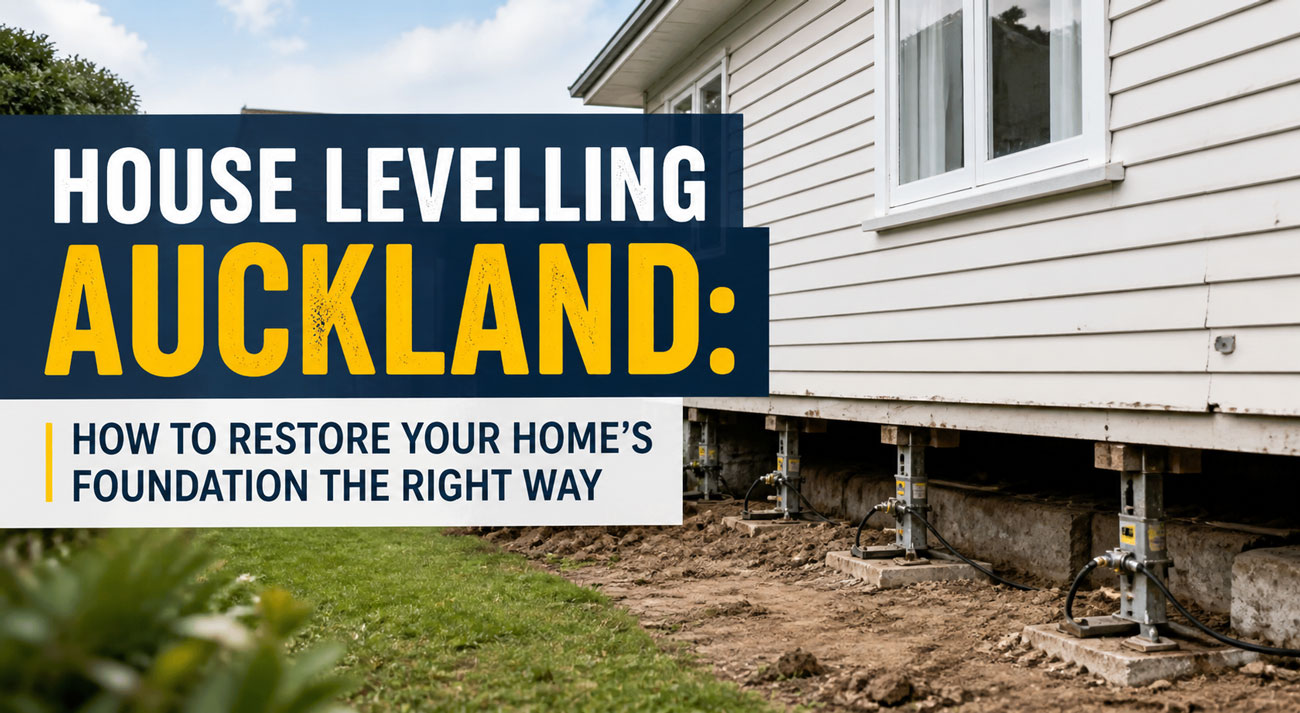
Auckland House Leveling & Repiling: How to Re-Level Your Home the Right Way
House levelling and repiling are critical processes for restoring the structural integrity of ageing or damaged homes. Across NZ, many properties—particularly older timber dwellings—experience foundation movement over time, leading to uneven floors, cracking walls, and long-term stability concerns. Auckland house levelling is not simply about correcting visible issues; it involves a detailed assessment of the foundation type, soil conditions, and the condition of existing foundations and piles. Whether the solution involves house lifting with hydraulic jacks, installing new piles, or addressing voids beneath a concrete slab, every approach must meet strict building code requirements and be handled by experienced repiling specialists. Done correctly, re-levelling a house ensures safety, protects your investment, and prevents further damage.
When signs of foundation problems begin to show, acting early is key. An experienced team will assess whether your home needs relevelling, repiling, or a combination of underpinning and foundation repair solutions. House levelling is crucial not only for comfort but also for long-term durability, especially in areas where ground movement and moisture can affect foundations. Working with a trusted Auckland repiling and foundation repair provider ensures your project is managed professionally from start to finish, including council consent, access underneath the house, and all lifting work. If you are a homeowner noticing uneven floors or suspect your property may need re-levelling, now is the time to act. Speak with the specialists at NZ CCS to secure expert guidance and reliable foundation solutions tailored to your home.
When do I need repiling or house repiling for my house?
What signs of foundation movement or uneven floors indicate repiling is needed?
Recognising early signs of foundation movement is essential before structural issues become severe. Uneven floors are often the most noticeable symptom, particularly in older timber homes where foundations and piles have shifted over time. Doors and windows that no longer close properly, cracks forming in walls or ceilings, and visible gaps between skirting boards and flooring are all indicators that house levelling or repiling may be required. In many cases, these problems develop gradually, making them easy to overlook until the imbalance becomes more pronounced. Identifying these warning signs early allows for more controlled and cost-effective foundation repair projects.
In situations where movement continues unchecked, the structural integrity of the property can be compromised. Professional assessment helps determine whether re-levelling alone is sufficient or if a full repile is necessary to restore stability. A detailed inspection will consider the foundation type, soil conditions, and access underneath the house. Homeowners unsure about the extent of movement can review need relevelling or lifting scenarios to better understand when intervention is required. Addressing these issues promptly ensures the home remains safe, level, and compliant with building code standards.
How does timber pile deterioration lead to the need for repiling?
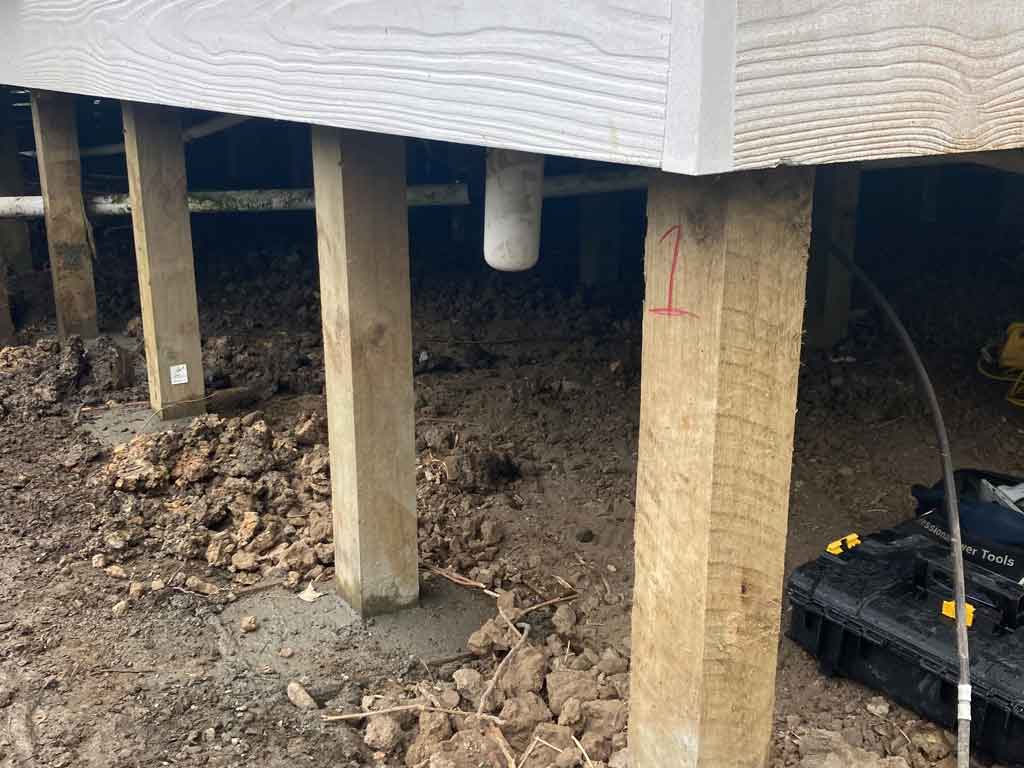
Timber piles have long been a common foundation solution across NZ, particularly in older homes. Over time, these piles can deteriorate due to moisture exposure, ground movement, and natural wear. Rot, insect damage, and prolonged damp conditions can weaken the timber, reducing its ability to support the structure above. As the piles lose strength, the house begins to settle unevenly, leading to the need for house repiling or re-levelling. This form of deterioration is often hidden underneath the house, making regular inspection critical for maintaining foundation health.
As deterioration progresses, lifting work using hydraulic jacks may be required to stabilise and reposition the structure while new piles are installed. Repiling involves replacing compromised timber with durable materials designed to meet current building code requirements. An experienced team will assess whether partial or full repiling is needed, ensuring the new foundations provide long-term support. In some cases, underpinning and repiling are combined to strengthen existing foundations and prevent further movement, particularly where soil conditions continue to shift.
Can void filling or underpinning avoid full repile for my home in Auckland?
Not every foundation issue requires a complete repile. In many cases, void filling or underpinning can provide effective foundation solutions without the need for extensive structural work. Voids beneath a concrete slab or around foundations can develop due to soil erosion or water damage, causing sections of the home to sink or become unstable. Void filling addresses these gaps by injecting specialised materials to restore support and improve load distribution. This method is particularly useful where foundation movement is localised rather than widespread.
In other scenarios, underpinning may be used to strengthen existing foundations and prevent further settlement. This process reinforces the base of the structure, improving stability without fully replacing foundations and piles. A thorough assessment will determine whether these methods are suitable or if repiling is the more reliable long-term solution. For a deeper understanding of modern void filling approaches and their effectiveness, it is important to consider both the extent of movement and the overall condition of the foundation.
How does house leveling (re-levelling) work and who are the repiling specialists?
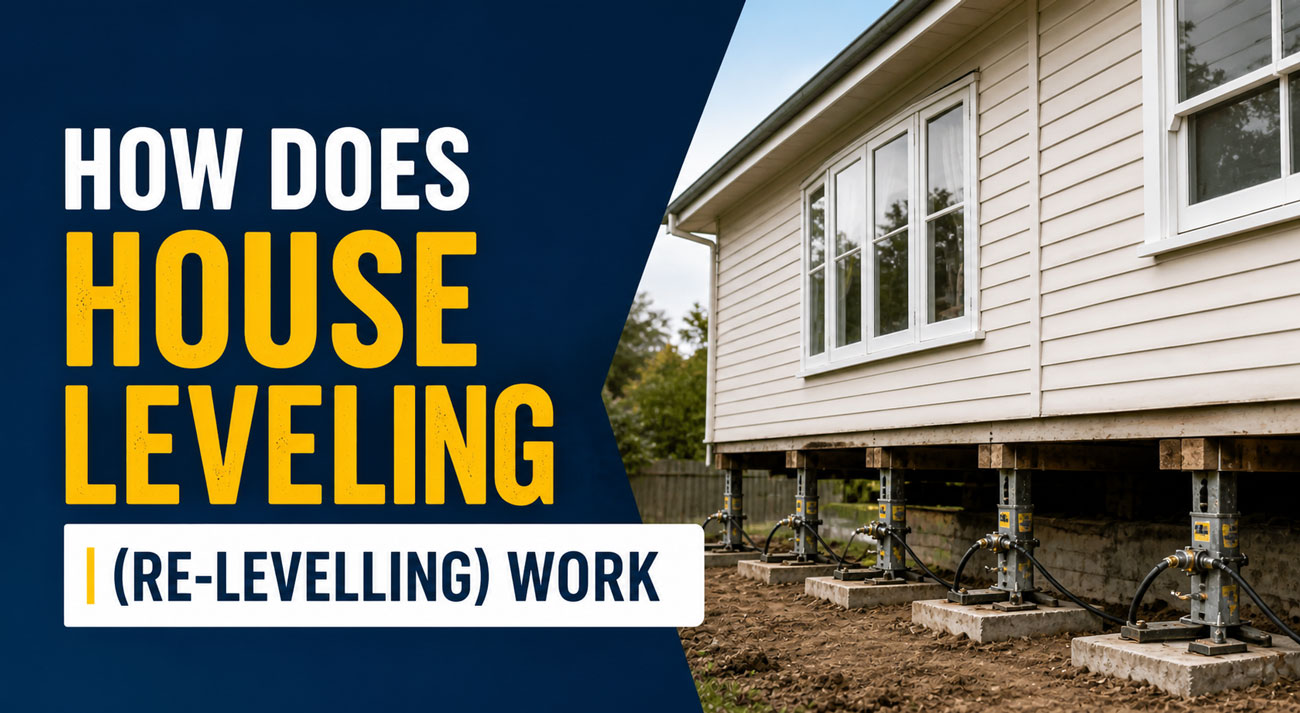
What steps are involved to lift the house and relevel using jacks and new piles?
House levelling and repiling is a structured process that begins with a detailed assessment of the existing foundations and piles. Once the extent of foundation movement is confirmed, access underneath the house is prepared to allow safe lifting work. Hydraulic jacks are strategically positioned beneath load-bearing points to gradually lift the house back towards its original level. This process requires precision, as lifting too quickly or unevenly can create further structural stress. During this stage, experienced teams continuously monitor alignment to ensure the house levelling is controlled and accurate.
Once the structure has been stabilised at the correct height, new piles are installed or existing ones are reinforced, depending on the foundation type. Repiling involves replacing deteriorated timber piles with modern materials that meet current building code standards, improving long-term stability. In many cases, this work is combined with underpinning and repiling techniques to strengthen the entire foundation system. For a broader understanding of how these processes integrate, repiling and foundation methods are often used together to deliver reliable, long-term foundation solutions.
How do repiling specialists assess foundation type and building code requirements?
Repiling specialists begin by identifying the existing foundation type, whether it involves timber piles, a concrete slab, or a combination of both. This assessment is critical, as each foundation requires a different approach to re-levelling and foundation repair. Soil conditions, moisture levels, and signs of foundation water damage are also evaluated to determine the underlying cause of movement. These insights guide the selection of appropriate foundation solutions, ensuring the work carried out addresses both the symptoms and the root cause of the issue.
Following the initial assessment, compliance with local building authorities and building code requirements becomes a central part of the project. Structural work such as house lifting, repiling, or underpinning typically requires council consent and must meet strict engineering standards. Experienced foundation repair teams prepare detailed plans and coordinate project management to ensure every stage is completed safely and correctly. This structured approach ensures that relevelling a house not only restores level floors but also reinforces the long-term structural integrity of the property.
What experience should a trusted Auckland repiling team have under the house?
A trusted repiling team must have extensive hands-on experience working underneath the house in a range of challenging conditions. Limited access, confined spaces, and varying ground conditions all require specialised skills and equipment. Teams should be well-versed in house lifting techniques, the use of hydraulic jacks, and the installation of new foundations and piles. Experience across different property types, including older timber homes and modern builds, ensures the team can adapt their approach to suit each project. This level of expertise is essential for delivering safe and effective house levelling and repiling outcomes.
Beyond technical capability, a professional foundation repair team should demonstrate strong project management and a clear understanding of foundation stabilisation methods. This includes recognising when alternative solutions such as underpinning or slope stabilisation may be required. Knowledge of common issues affecting NZ homes, including shifting soils and weather-related damage, is also important. For further insight into why house levelling is crucial, understanding the broader impact of foundation movement helps highlight the value of working with an experienced foundation repair team.
What foundation repair and foundation solutions are available in Auckland?
When is underpinning and repiling preferred over concrete slab or void filling?
Underpinning and repiling are typically preferred when foundation movement is widespread or when existing foundations and piles have significantly deteriorated. In older timber homes, where structural integrity relies heavily on the condition of the piles, house repiling becomes essential to restore stability. Uneven floors, noticeable settlement, and ongoing movement often indicate that simple void filling or surface-level fixes will not be sufficient. In these cases, repiling and foundation work address the root cause by installing new piles and reinforcing the load-bearing structure, ensuring the house can be safely re-levelled and supported long-term.
In contrast, void filling or concrete slab repairs are more suited to localised issues where the foundation type remains structurally sound. The choice between these foundation solutions depends on factors such as soil conditions, the extent of damage, and access underneath the house. An experienced foundation repair team will assess whether underpinning and repiling are required or if less invasive methods can achieve the desired outcome. Understanding how foundations and piles function together is key when deciding on the most appropriate repair approach.
How do foundation repair options address signs of foundation water damage?
Signs of foundation water damage can significantly affect the performance of foundations, particularly in areas prone to moisture retention or poor drainage. Common indicators include dampness underneath the house, timber pile rot, soil erosion, and cracking within the structure. These issues often lead to foundation movement, which in turn causes uneven floors and misalignment throughout the home. Foundation repair solutions are designed to not only correct the visible damage but also eliminate the underlying moisture-related problems contributing to the instability.
Repair methods may involve replacing compromised timber piles, improving drainage systems, or reinforcing the foundation through underpinning and repiling. In some cases, void filling is used to stabilise areas where water has washed away supporting soil beneath a concrete slab. Addressing moisture-related damage early helps prevent further deterioration and ensures long-term foundation stabilisation. For a more detailed breakdown of signs of foundation water damage, recognising the early warning signs plays a critical role in selecting the right repair strategy.
Can repiling and foundation work be combined with house levelling and repiling projects?
Repiling and foundation work are often carried out alongside house levelling to achieve a complete and lasting solution. When a property requires re-levelling, simply lifting the house without addressing the condition of existing piles may lead to recurring issues. Combining house levelling and repiling ensures that once the structure is lifted using hydraulic jacks, it is supported by new foundations designed to meet modern building code standards. This integrated approach improves structural integrity and provides a stable base for the home moving forward.
In many foundation repair projects, additional methods such as underpinning, void filling, or slope stabilisation may also be incorporated depending on site conditions. This allows for a tailored solution that addresses both the immediate need for relevelling and any underlying causes of foundation movement. Careful project management and coordination with local building authorities ensure all structural work is completed safely and to the required standards. By combining these processes, homeowners benefit from a comprehensive foundation solution that reduces the likelihood of future movement and ongoing repairs.

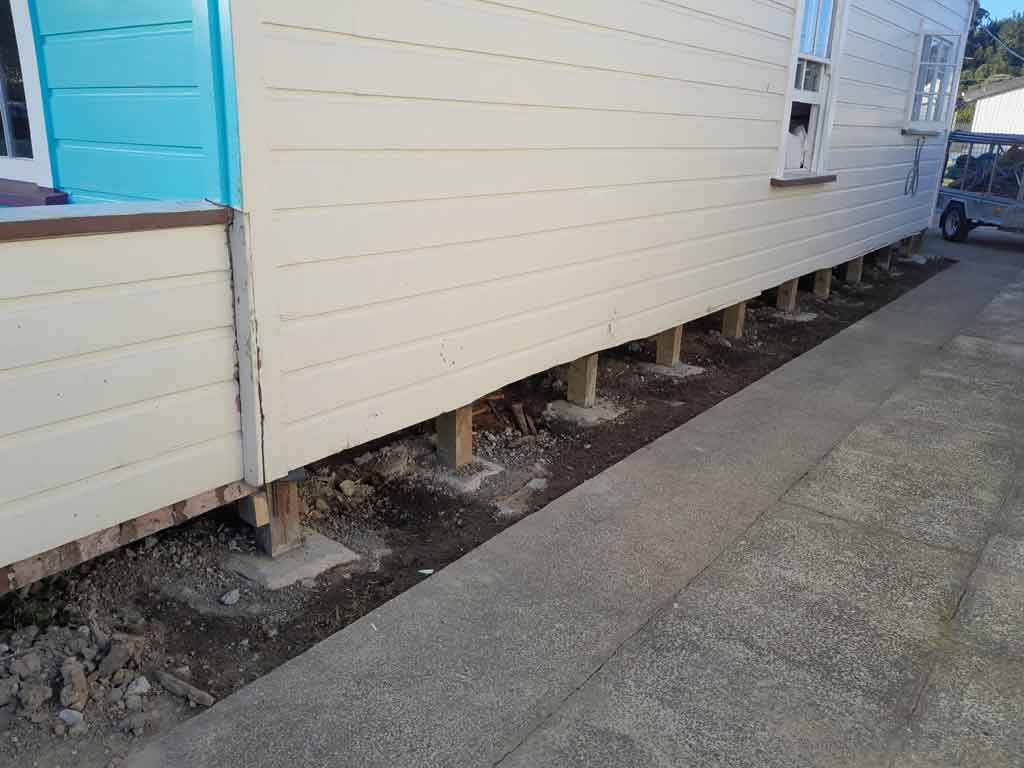
How much does house levelling and repiling cost and how long will relevelling take?
What factors influence cost: timber condition, new piles, concrete slab or underpin?
The cost of house levelling and repiling varies depending on several key factors, with the condition of existing timber piles being one of the most significant. If timber has deteriorated due to moisture or age, full house repiling may be required, increasing both labour and material costs. The type of foundation also plays a major role, as working with a concrete slab differs considerably from re-levelling a suspended timber floor. Projects involving underpinning and repiling tend to be more complex, particularly when new piles must be installed to meet current building code requirements. Access underneath the house, site conditions, and the extent of foundation movement all contribute to the overall scope of foundation repair.
Another important consideration is the level of structural work required to restore stability. Localised issues may be resolved with targeted foundation solutions such as void filling or minor re-levelling, while more extensive damage will require a full repile and foundation stabilisation. Professional assessment ensures the most appropriate approach is taken, avoiding unnecessary costs while addressing the root cause of the issue. For homeowners comparing repair options, understanding the differences outlined in foundation repair projects can provide valuable insight into cost versus long-term performance.
How long does house lifting, releveling and repiling typically take for Auckland houses?
The timeframe for house levelling and repiling depends on the size of the property, the foundation type, and the complexity of the work required. Smaller projects involving minor re-levelling or partial repiling may take a matter of days, while larger jobs requiring full house lifting and installation of new foundations can extend over several weeks. The process typically includes preparation, lifting work using hydraulic jacks, installation of new piles, and final re-levelling to ensure the structure is stable and aligned. External factors such as weather conditions and ground stability can also influence the overall duration.
Each stage of the project must be carefully managed to ensure structural integrity is maintained throughout. Council consent and coordination with local building authorities may also affect timelines, particularly for more complex foundation repair projects. Efficient project management and an experienced team help minimise delays while ensuring all work is completed safely and to standard. In many cases, combining house levelling with repiling and foundation work can streamline the process, reducing the likelihood of future disruptions or repeat repairs.
Are there relocation or access concerns for homeowners during repile work?
Relocation and access are important considerations during house repiling, particularly when extensive structural work is required. In some cases, homeowners may need to temporarily vacate the property while lifting work and foundation repairs are carried out, especially if access underneath the house is restricted or safety concerns arise. Older homes with limited clearance can require additional preparation to create sufficient working space, which may involve excavation or modifications to improve access. These factors can influence both the cost and timeline of the project.
In other situations, it may be possible to remain in the home during certain stages of the work, depending on the level of disruption and the areas affected. Clear planning and communication help ensure homeowners understand what to expect throughout the process. Considerations such as building removals, relocation requirements, and site accessibility should all be assessed early in the project. For further insight into how environmental factors can impact foundations and access conditions, reviewing foundation movement scenarios highlights how ground conditions can influence both repair methods and site logistics.
How do I choose a trusted Auckland repiling company for relevelling and foundation repair?
What questions should homeowners ask repiling specialists about experience and references?
Choosing the right repiling specialists starts with asking clear, practical questions about their experience and track record. Homeowners should ask how many house levelling and repiling projects the team has completed, particularly with similar foundation types such as timber piles or concrete slab structures. It is also important to understand whether they have experience working underneath the house in restricted access environments, as this often impacts the complexity of the job. Questions around project management, handling council consent, and the use of hydraulic jacks during house lifting will provide insight into their technical capability and approach to structural work.
A reliable team should be able to provide references or examples of completed foundation repair projects, demonstrating consistent results across different property types. It is worth asking how they diagnose foundation movement and whether they offer tailored foundation solutions rather than a one-size-fits-all approach. Reviewing detailed case studies or insights such as house relevelling examples can help homeowners better understand what to expect from a professional service. Clear communication and transparency during this stage often reflect the overall quality of the work delivered.
How to verify compliance with NZ building code and warranties for repiling and re-piling?
Compliance with NZ building code requirements is a critical part of any repiling and foundation repair project. Homeowners should confirm that the contractor follows all relevant regulations and works closely with local building authorities where required. This includes obtaining council consent for structural work such as house lifting, installing new foundations, or carrying out underpinning and repiling. Proper documentation, engineering approvals, and adherence to safety standards ensure that the work meets legal requirements and protects the long-term structural integrity of the property.
Equally important is understanding the warranties provided for the completed work. A professional foundation repair team should offer clear terms covering materials, workmanship, and the durability of new piles or underpinning solutions. These warranties provide reassurance that the foundation stabilisation has been carried out to a high standard. Homeowners should also confirm whether inspections are conducted after completion to verify that the house levelling and repiling meets all required standards and performance expectations.
What red flags to watch for when hiring an under-house repiling and relevelling team?
There are several warning signs that may indicate a lack of experience or professionalism when selecting a repiling and house levelling provider. One common red flag is vague or incomplete assessments that fail to properly identify signs of foundation movement or the underlying causes of uneven floors. Contractors who offer quick fixes without thoroughly evaluating the foundation type, soil conditions, or access under the house may not be addressing the root issue. A lack of clarity around timelines, costs, or structural work requirements can also signal poor project management and increase the risk of complications during the job.
Another concern is the absence of proper compliance processes or reluctance to discuss building code requirements and council consent. Reliable teams should have no hesitation in explaining how they meet regulatory standards and ensure safe lifting work using appropriate equipment such as hydraulic jacks. Homeowners should also be cautious of contractors who cannot demonstrate previous work or provide evidence of successful foundation repair projects. Understanding broader risks highlighted in foundation repair scenarios can help identify whether a contractor is taking a thorough and professional approach.
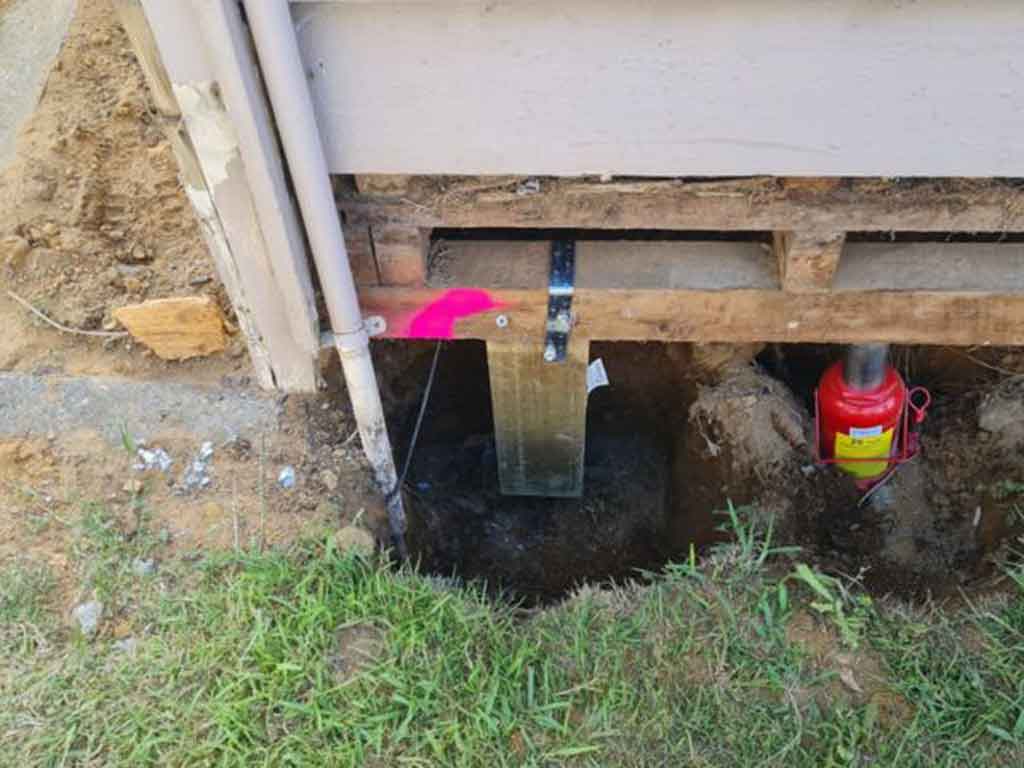
Conclusion
House levelling and repiling are essential processes for maintaining the structural integrity of homes across NZ, particularly where foundation movement, uneven floors, or deteriorating timber piles are present. Whether the issue stems from moisture damage, ageing foundations, or shifting ground conditions, identifying the correct foundation solutions early can prevent more extensive and costly repairs. From underpinning and void filling through to full house repiling and re-levelling, each approach must be carefully matched to the foundation type and site conditions. A well-executed project ensures that foundations and piles are stabilised, new piles meet current building code requirements, and the home is safely brought back to level.
Choosing an experienced foundation repair team is just as important as the work itself. Proper project management, compliance with local building authorities, and proven experience underneath the house all contribute to a successful outcome. For homeowners looking to understand why house levelling is crucial, taking action at the right time can protect both the value and safety of the property. If you are dealing with signs of foundation movement or suspect your home may need relevelling or lifting, working with a professional team ensures the job is done correctly from start to finish. Learn more about reliable solutions and expert support by visiting NZ CCS.
