You’re on Underpinning


Un-level or sloping floors? Cracked walls or ceilings? Windows/doors don’t open/close? – the issue in many cases lies below the floor. Our team are able to provide effective and economic solutions for your foundation and retaining issues.

- House Re-piling and other foundation repairs
- Underpinning, Void Filling and Ground Improvement
- Commercial Building Foundation Repairs
- Retaining Structures (Timber, Palisade, Block) and ground stabilisation repairs
- Piling for new and existing buildings
- Building Works (both commercial and residential)

- Expertise and Experience: With 20+ years in the industry, our team has the knowledge and skills to tackle even the most challenging foundation projects
- Innovative Solutions: Our team continuously innovates and adapts to the latest industry advancements.
- Customer-Centric Approach: We believe in building lasting relationships with our clients through transparency, integrity, and exceptional service. Your satisfaction is our top priority.
- Safety and Quality: We adhere to stringent safety standards and quality controls, ensuring that every project is completed safely and to the highest standards.

- CCS is able to provide the full package for clients for both residential and commercial foundation solutions, from drawings for council consent to Engineering PS1 & PS4.
- Our systems may not trigger a building consent for many residential properties as we re-level in-situ without having to remove and relocate the home.
- CCS have experienced Licensed Building Practitioners and Project Managers. This makes us capable of delivering the entire project.

Un-level or sloping floors? Cracked walls or ceilings? Windows/doors don’t open/close? – the issue in many cases lies below the floor. Our team are able to provide effective and economic solutions for your foundation and retaining issues.

- House Re-piling and other foundation repairs
- Underpinning, Void Filling and Ground Improvement
- Commercial Building Foundation Repairs
- Retaining Structures (Timber, Palisade, Block) and ground stabilisation repairs
- Piling for new and existing buildings
- Building Works (both commercial and residential)
Underpinning
House underpinning is a construction process used to strengthen and stabilise the foundation of an existing building. This process is often necessary when the original foundation is not strong enough to support the building or when the building has experienced settlement or structural damage.
Reasons for House Underpinning
-
- Foundation Failure: This can be due to poor soil conditions, inadequate initial construction, or changes in the soil due to factors like moisture content, nearby construction, or natural disasters.
- Settlement: Over time, foundations can settle unevenly, causing cracks and structural issues in the building.
- Increased Load: Adding extra floors or heavier materials to the building can require a stronger foundation.
- Environmental Changes: Changes in the environment, such as tree root growth or excavation work nearby, can compromise the integrity of the foundation.
- Water Damage: Prolonged exposure to water from leaks or floods can weaken the foundation.
Methods of House Underpinning
-
- Mass Concrete Underpinning (Pit Method): This is the traditional method where sections of the soil below the foundation are excavated and replaced with concrete to form a solid base.
- Beam and Base Method: A reinforced concrete beam is placed below the existing foundation. This beam transfers the building’s load to a mass concrete base that spreads the load over a wider area.
- Mini-Piled Underpinning: This method is used when the soil conditions are poor or access is limited. It involves driving mini-piles deep into the ground to reach stable soil or rock, and then connecting these piles to the foundation with reinforced concrete.
- Pile and Beam Underpinning: Similar to the beam and base method but uses piles (deep foundations) to support a reinforced concrete beam.
Steps in the Underpinning Process
-
- Assessment and Design: At CCS, we have professionals who can inspect the building and recommend an underpinning solution.
- Site Preparation: Clear the area around the foundation and ensure safety measures are in place.
- Excavation: Carefully excavate the soil around and below the foundation.
- Installation: Install the underpinning method chosen, such as pouring concrete or inserting piles.
- Backfilling and Compaction: Once the underpinning is complete, backfill the excavated areas.
Underpinning is a specialised construction task that requires professional assessment and execution to ensure the safety and stability of the building. If you suspect your home may need underpinning, it’s crucial to consult with a qualified foundation specialist such as CCS.


Void Filling
Void filling is a critical process used to enhance the structural integrity, stability, and durability of foundations.
Common Applications of Void Filling
1. Foundation Stabilisation:
-
- Void Filling Materials: Concrete, cement grout.
- Purpose: To stabilise and support foundations that have settled or shifted due to soil movement or other factors.
2. Underground Voids and Sinkholes:
-
- Void Filling Materials: Flowable fill, grout.
- Purpose: To prevent collapse and ensure safety by filling underground voids caused by soil erosion or natural sinkholes.
Materials Used by CCS in Void Filling
1. Concrete:
-
- Characteristics: Strong, durable, and versatile.
- Usage: Commonly used for large voids where high strength is required, such as in foundations and structural supports.
2. Grout:
-
- Characteristics: A mixture of cement, water, and sometimes sand or other aggregates.
- Usage: Used in a variety of applications, including filling gaps in masonry, stabilising foundations, and sealing joints.
3. Flowable Fill:
-
- Characteristics: Low-strength, self-compacting cementitious material.
- Usage: Used as a backfill material in trenches, around utility lines, and to fill large voids.
Benefits of Void Filling
-
- Improved Structural Integrity: Filling voids prevents settlement and collapse, ensuring the longevity of structures.
- Enhanced Safety: Stabilising voids prevents accidents and property damage.
- Cost-Effectiveness: Prevents more costly repairs by addressing void issues early.
- Versatility: Various materials and techniques can be tailored to specific project needs and conditions.
Void filling in construction is a vital process that ensures the stability and durability of various structures. By using the appropriate materials and techniques, the team at CCS can effectively address voids and prevent potential structural failures.
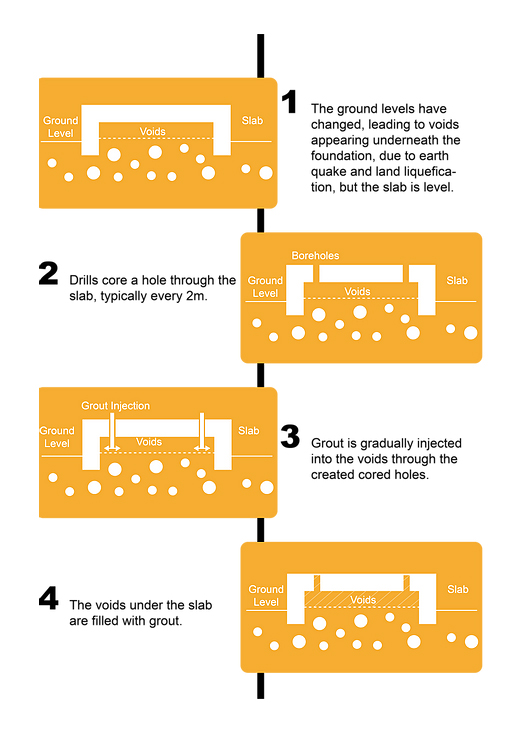
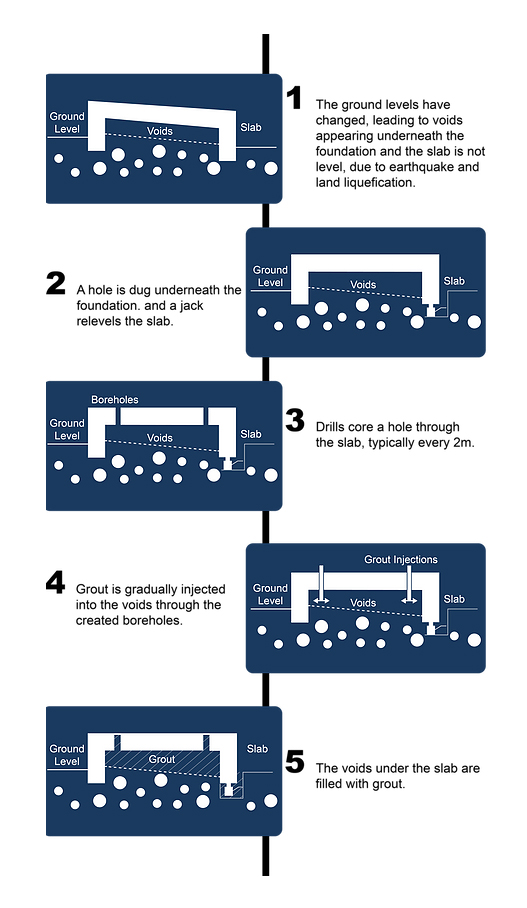
Void Filling Diagrams
Ground Improvement
Ground improvement techniques are essential for enhancing the physical properties of soil to meet specific engineering requirements. These methods are used to increase the bearing capacity, reduce settlement, improve stability, and mitigate liquefaction potential. Specific ground improvement methods are chosen based on specific site conditions, soil types, and project requirements. The goal is to ensure the soil meets the necessary criteria for supporting structures and preventing ground-related issues.
VIEW PROJECTS
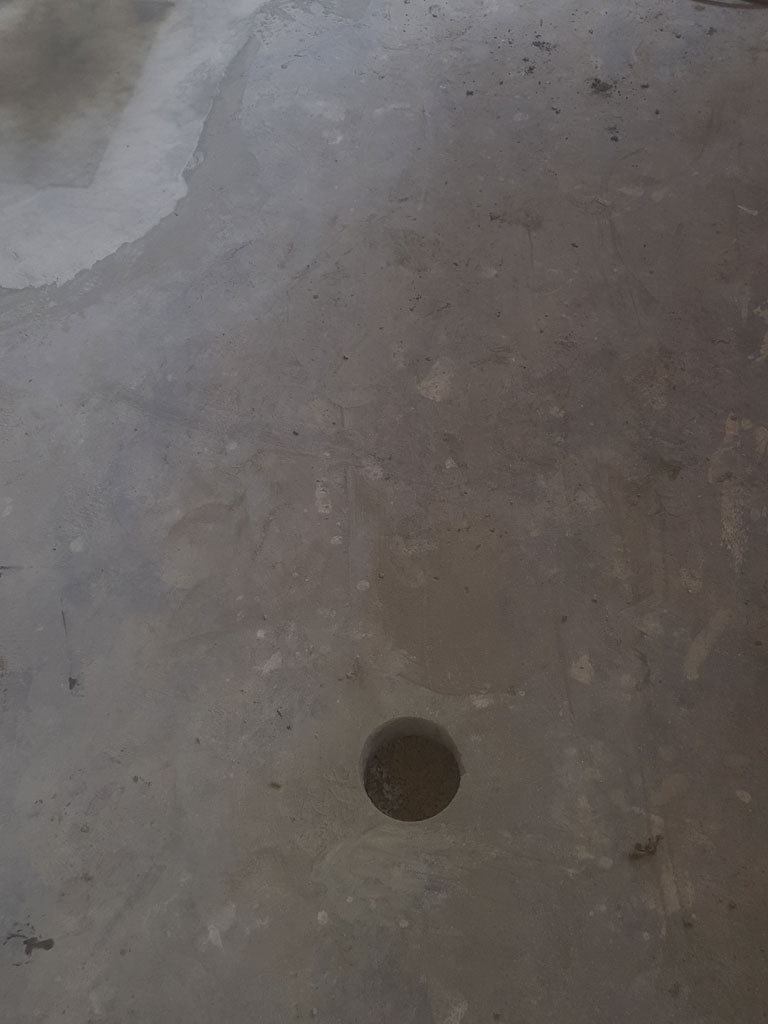
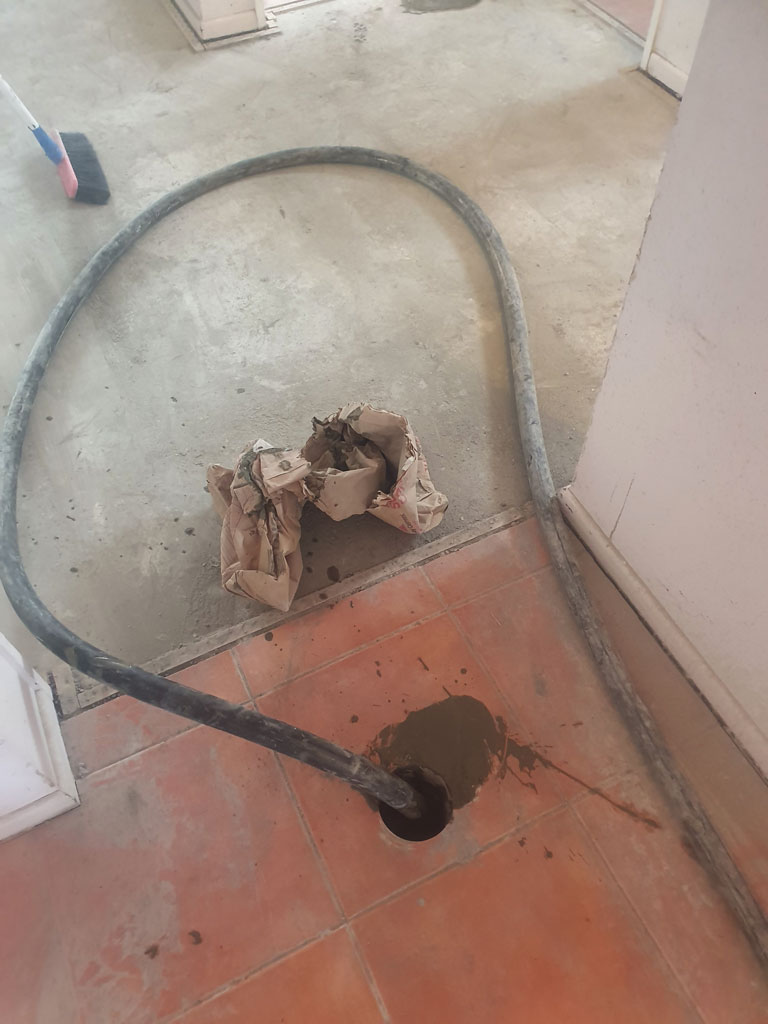
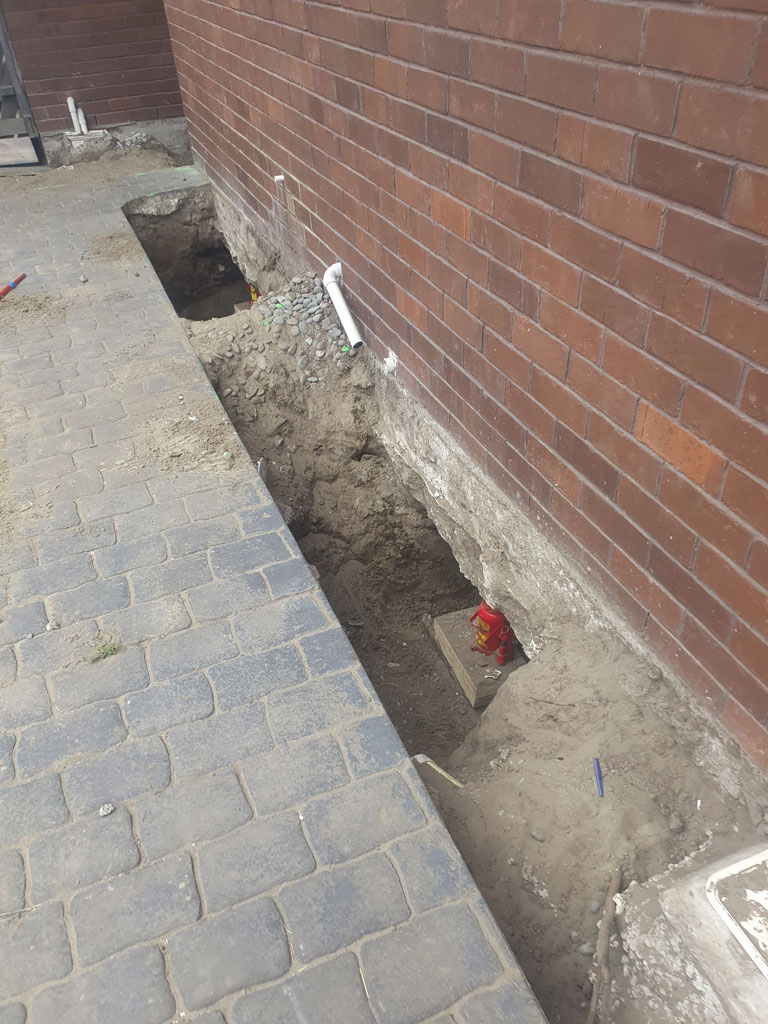
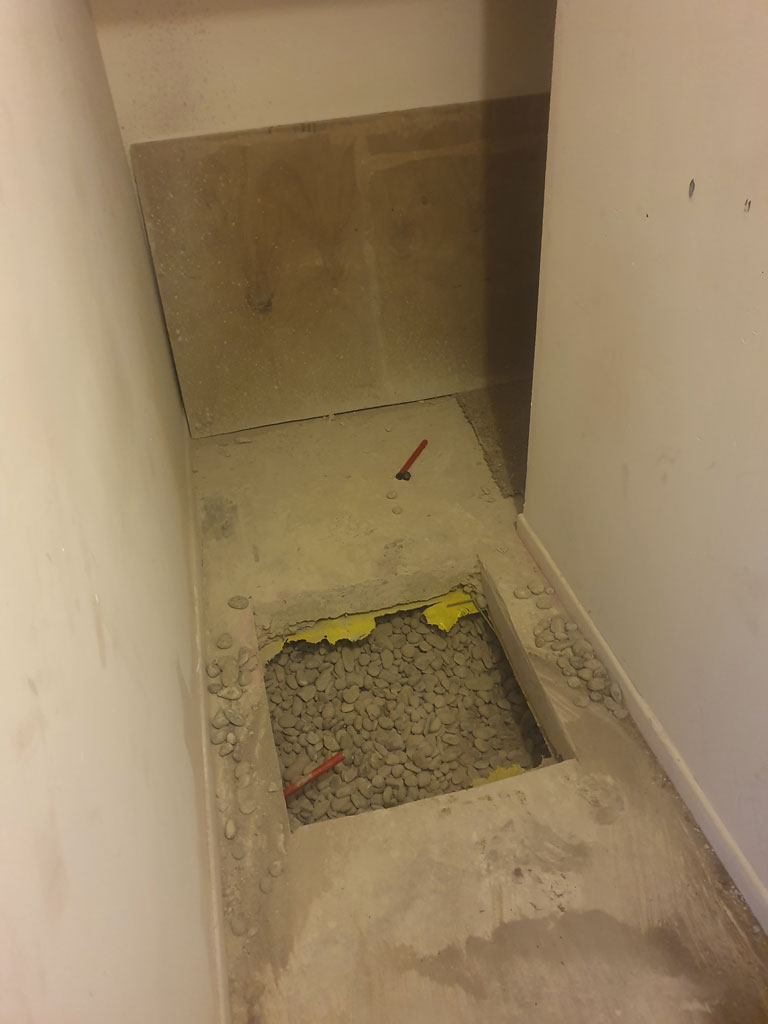
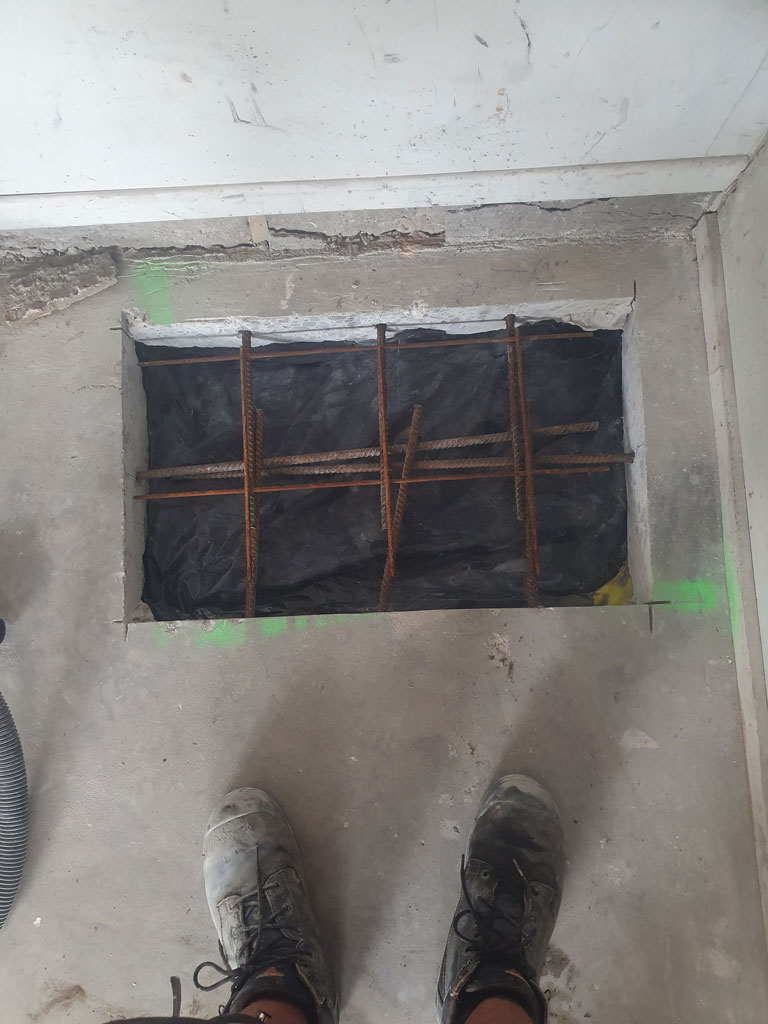
Holes cored for grout injection, and pits excavated for releveling
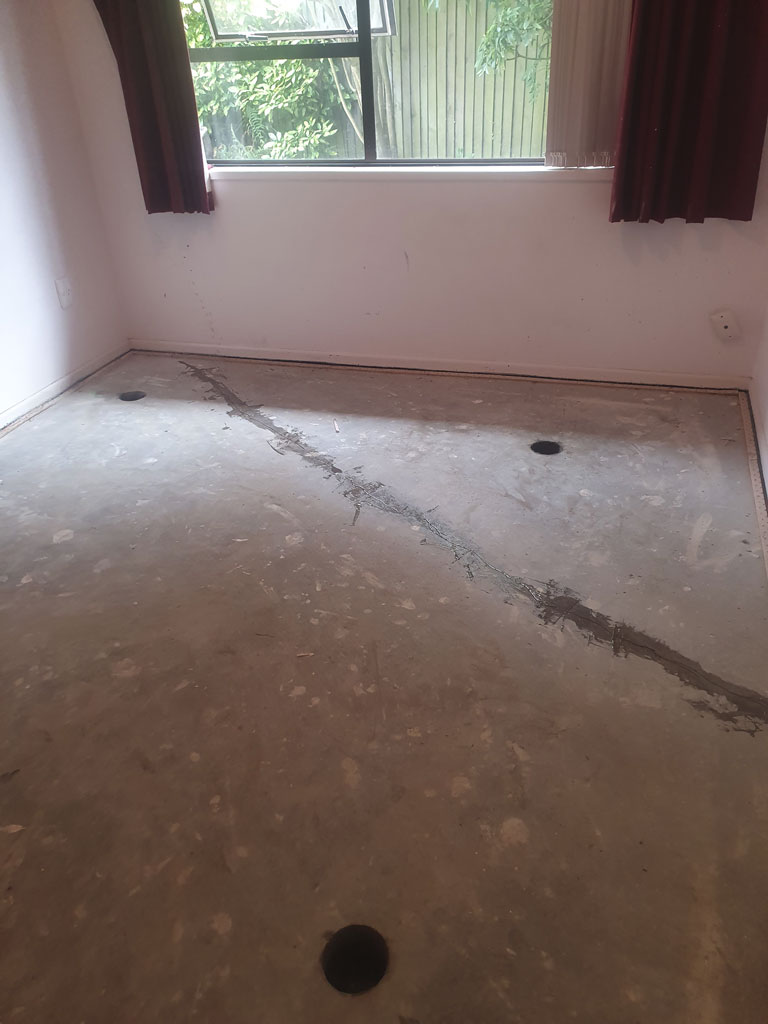

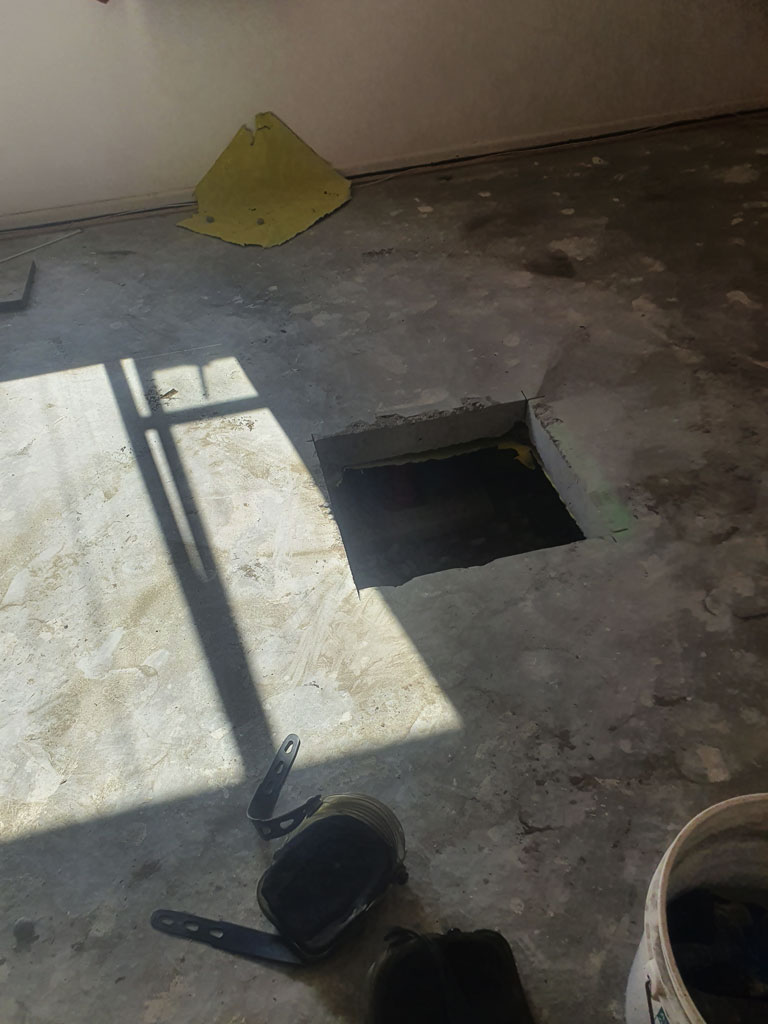
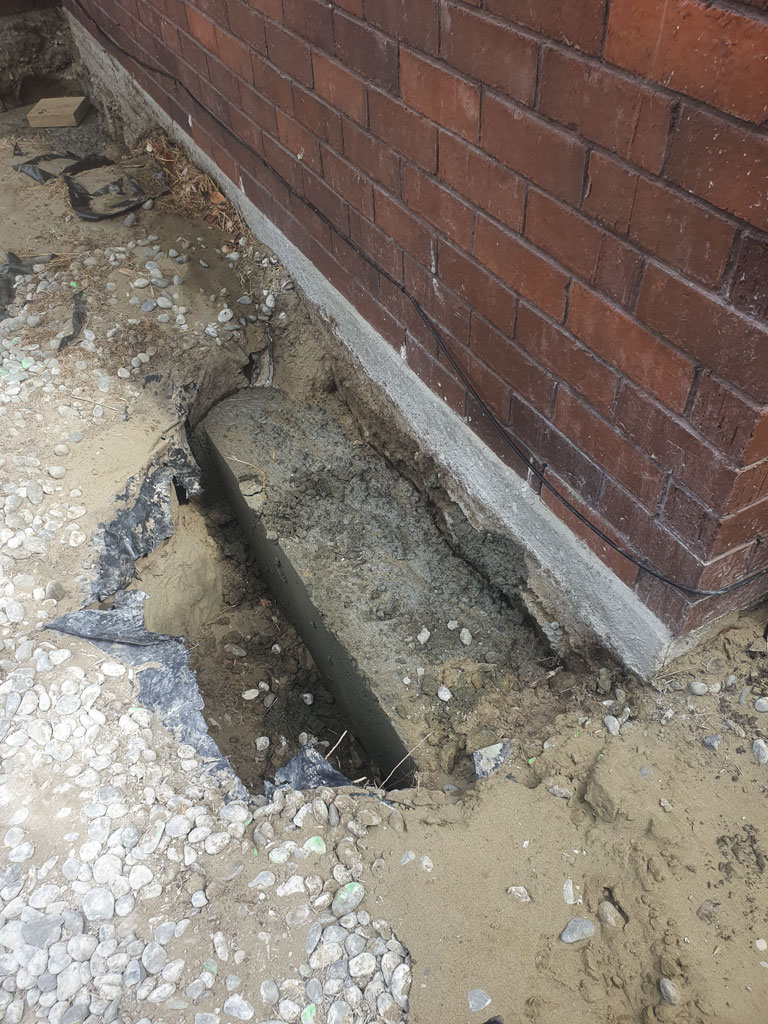
Releveling and void filling